Yaizy Blog
Engaging Students with Different Mindsets in Online Learning: A Practical Approach to Lesson Design
Blog
Nov 16, 2026
By Kseniya Bortnikova, Digital Learning Product Lead at YaizY
Students come to YaizY motivated by different things. Some respond to clear goals and progress, while others engage more through collaboration, personal relevance, or the chance to build their skills.
When we understand what drives a student, we can make the learning experience more engaging for them.
Our approach to student mindsets has been shaped and refined through thousands of hours of online teaching. In this article, we share the lesson activities we use to support different mindsets and help students stay engaged, participate, and make progress.
A Practical Framework for Student Mindsets
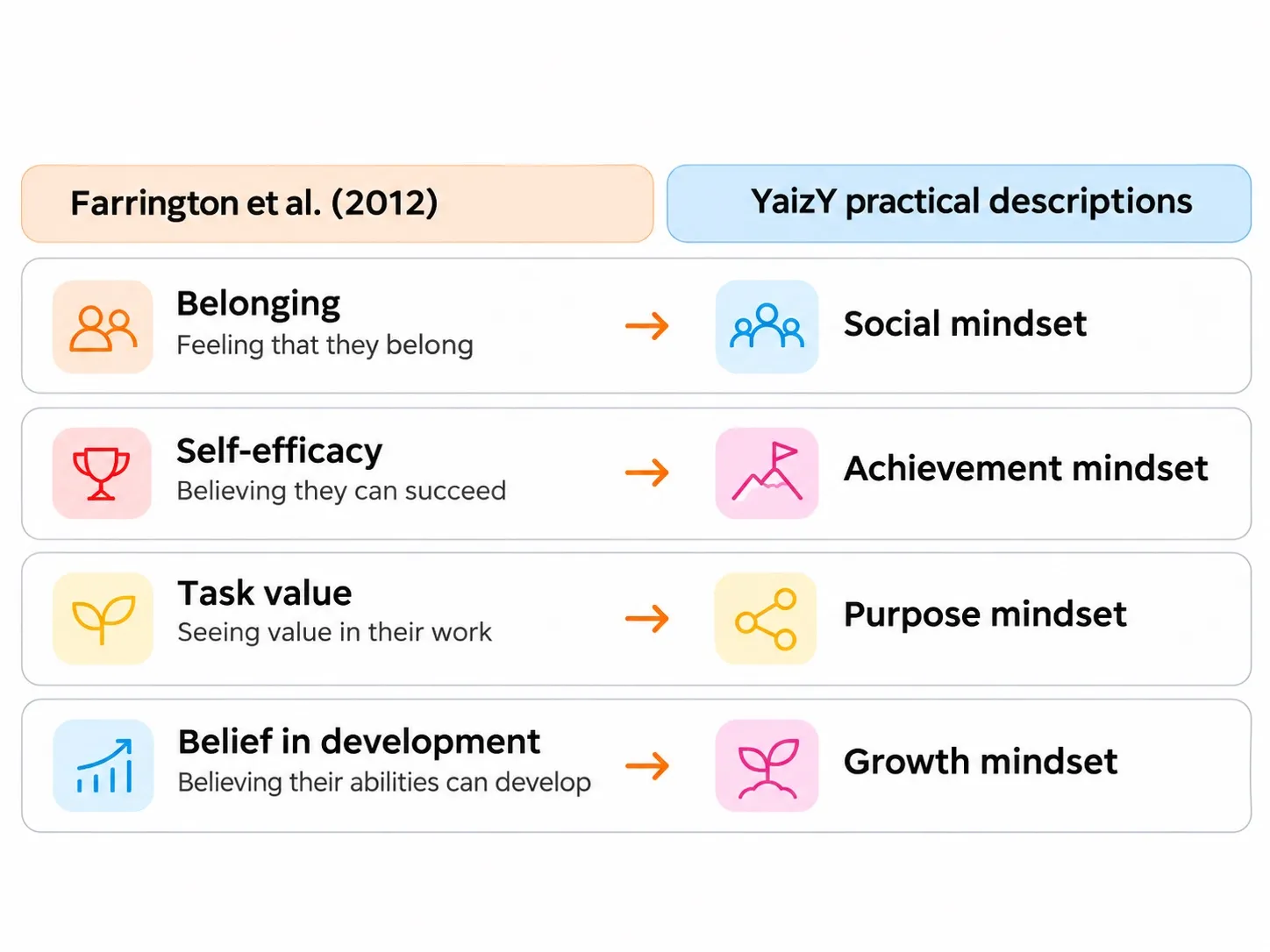
Research on academic mindsets provides a foundation for this approach. In Teaching Adolescents to Become Learners, Farrington and colleagues (2012) brought together research on four beliefs that influence students' engagement and persistence:
- feeling that they belong;
- believing they can succeed;
- seeing value in their work;
- and believing their abilities can develop.
These concepts help us consider what students need from the learning experience alongside the knowledge and skills they are developing.
At YaizY, we connect this research with our teaching experience through four practical descriptions: social, achievement, purpose, and growth mindset.
We use dominant mindset to describe what seems to matter most for a student’s engagement in a particular learning situation. These priorities can overlap and change across subjects and tasks.
Four Mindsets and the Practical Elements That Support Them
1. Social Mindset — Academic Belonging
Students with a dominant social mindset are especially engaged by connection, interaction, and opportunities to contribute. Feeling included and having their ideas heard can make learning more meaningful.
Practical elements in YaizY lessons:
- Warm-up activities that encourage students to share ideas and experiences.
- Group exercises in breakout rooms where students work toward a shared goal.
- Class discussions that encourage interaction and collaboration.
- Opportunities to participate through chat as well as speaking aloud.
2. Achievement Mindset — Self-Efficacy
Students with a dominant achievement mindset are often motivated by clear goals, attainable challenges, and visible accomplishments. Completing a task successfully can strengthen their confidence and encourage them to take on the next challenge.
Practical elements in YaizY lessons:
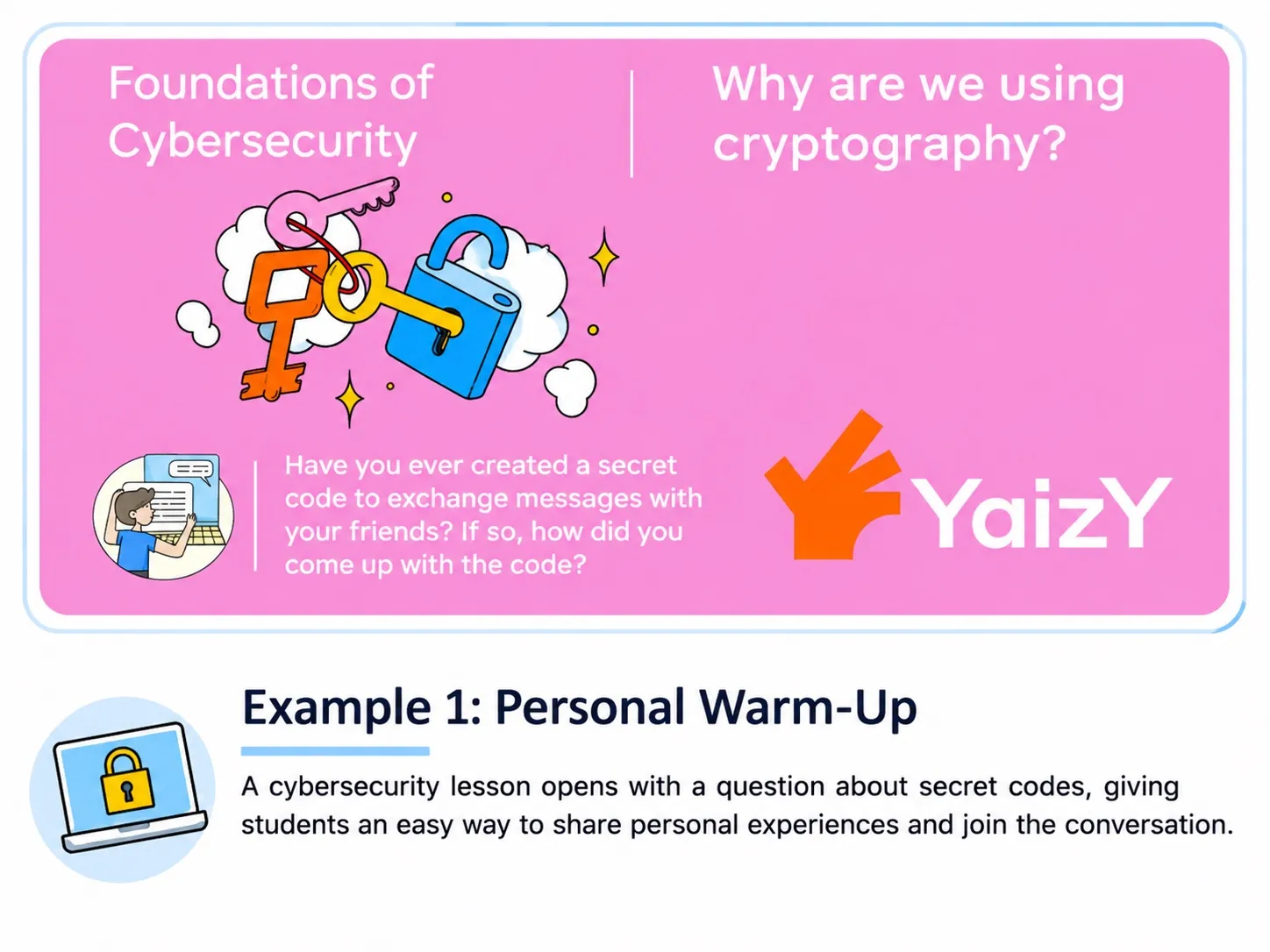
- Quizzes in every lesson that allow students to check their understanding.
- Short practical exercises that create opportunities for small wins.
- Coding challenges and friendly competitions that encourage students to apply their skills.
- Clear success criteria and opportunities to recognize accomplishments.
3. Purpose Mindset — Task Value
Students with a dominant purpose mindset want to understand how learning connects to their interests, real-world applications, or future possibilities.
Research on personal relevance supports this idea. Hulleman and Harackiewicz (2009) asked high school science students to connect course material with their own lives. The activity increased interest and improved course grades among students who initially had low expectations of success.
Practical elements in YaizY lessons:
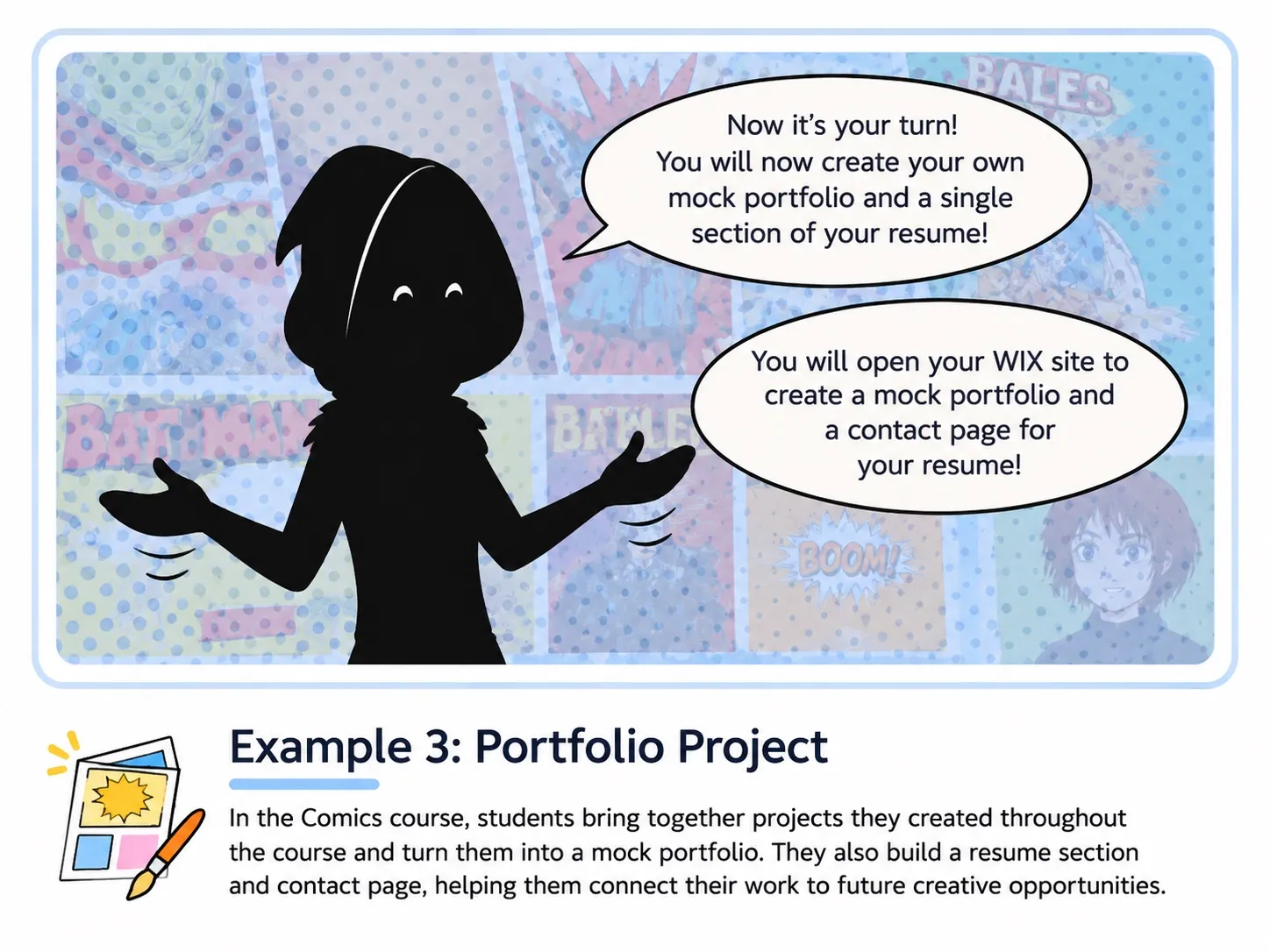
- Examples from professional practice and real-world industries.
- Authentic digital tools used by professionals.
- Projects connected to students' interests, goals, or potential careers.
- Questions that encourage students to identify how they could use what they are learning.
4. Growth Mindset — Belief in Improvement
Students with a dominant growth mindset are especially interested in developing their skills and seeing progress over time. They value feedback, revision, and opportunities to learn from mistakes.
Research reflects this. In a large study of US ninth-graders, Yeager and colleagues (2019) found modest improvements in grades among lower-achieving students after a brief growth mindset intervention. The effects varied across schools and were stronger in environments where peer norms supported taking on challenges.
This suggests that believing improvement is possible is only part of the picture. Students also need a learning environment that gives them space to act on that belief.
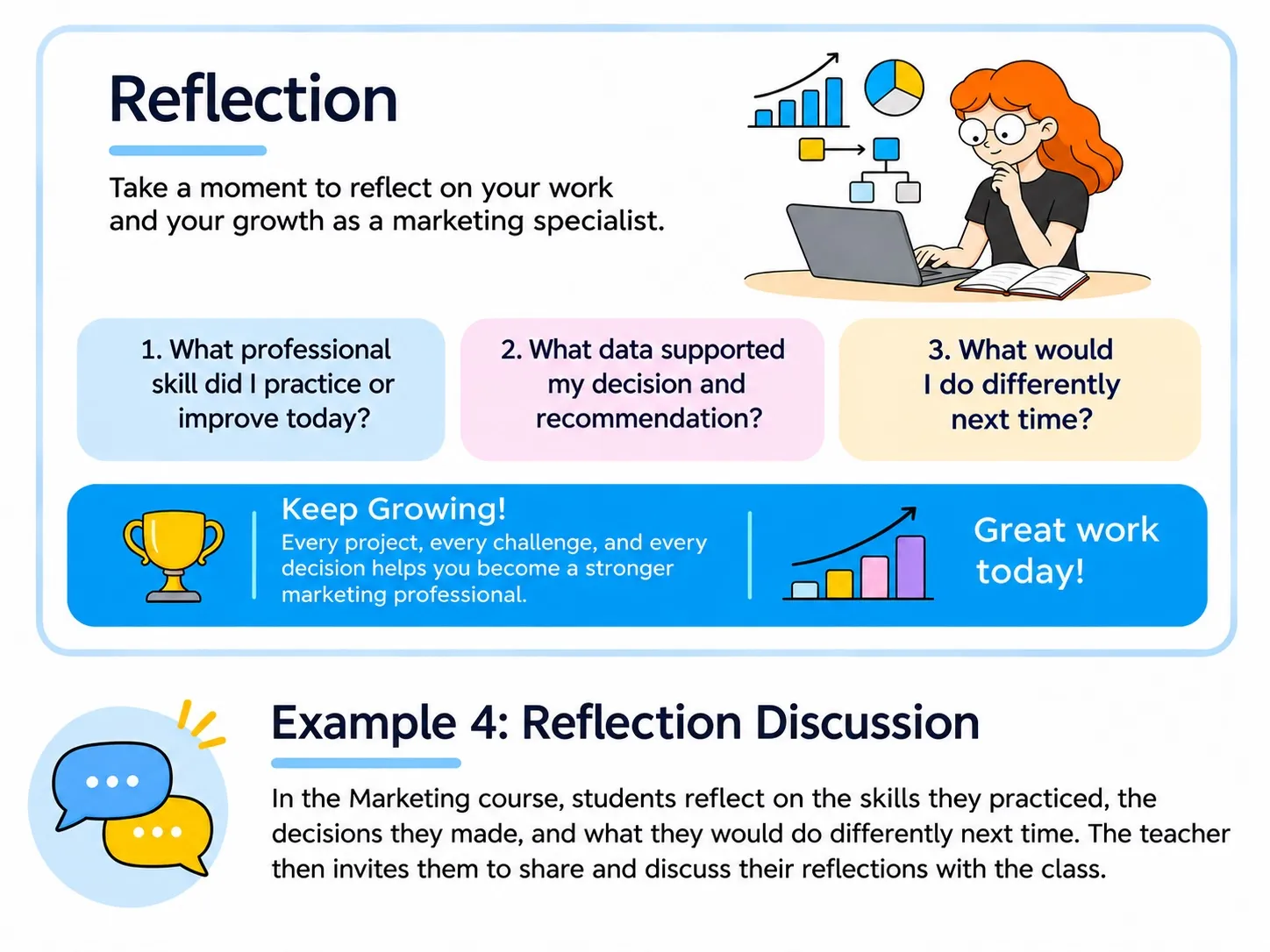
Reflection is one way to support this process. Zimmerman’s model of self-regulated learning (2002) describes reflection as part of a broader cycle that includes planning, monitoring, and adjusting one’s work.
That is why we often ask students to reflect after completing a project stage. Questions might prompt them to consider what they changed, what worked, what was challenging, and what they would approach differently next time.
Practical elements in YaizY lessons:
- Actionable teacher feedback that identifies specific next steps.
- Peer review activities that expose students to different approaches.
- Reflection questions that encourage students to recognize their progress.
- Opportunities to revise and improve projects based on feedback.
These four descriptions are YaizY’s practical interpretation of academic mindset research, rather than fixed categories of learners. Students may respond to several of these motivations at the same time.
Making Engagement a Consistent Part of Lesson Design
Supporting different student mindsets does not mean creating four versions of every lesson or putting students into fixed categories.
It means giving students different ways to engage with the same material.
When we design a lesson, we come back to four questions:
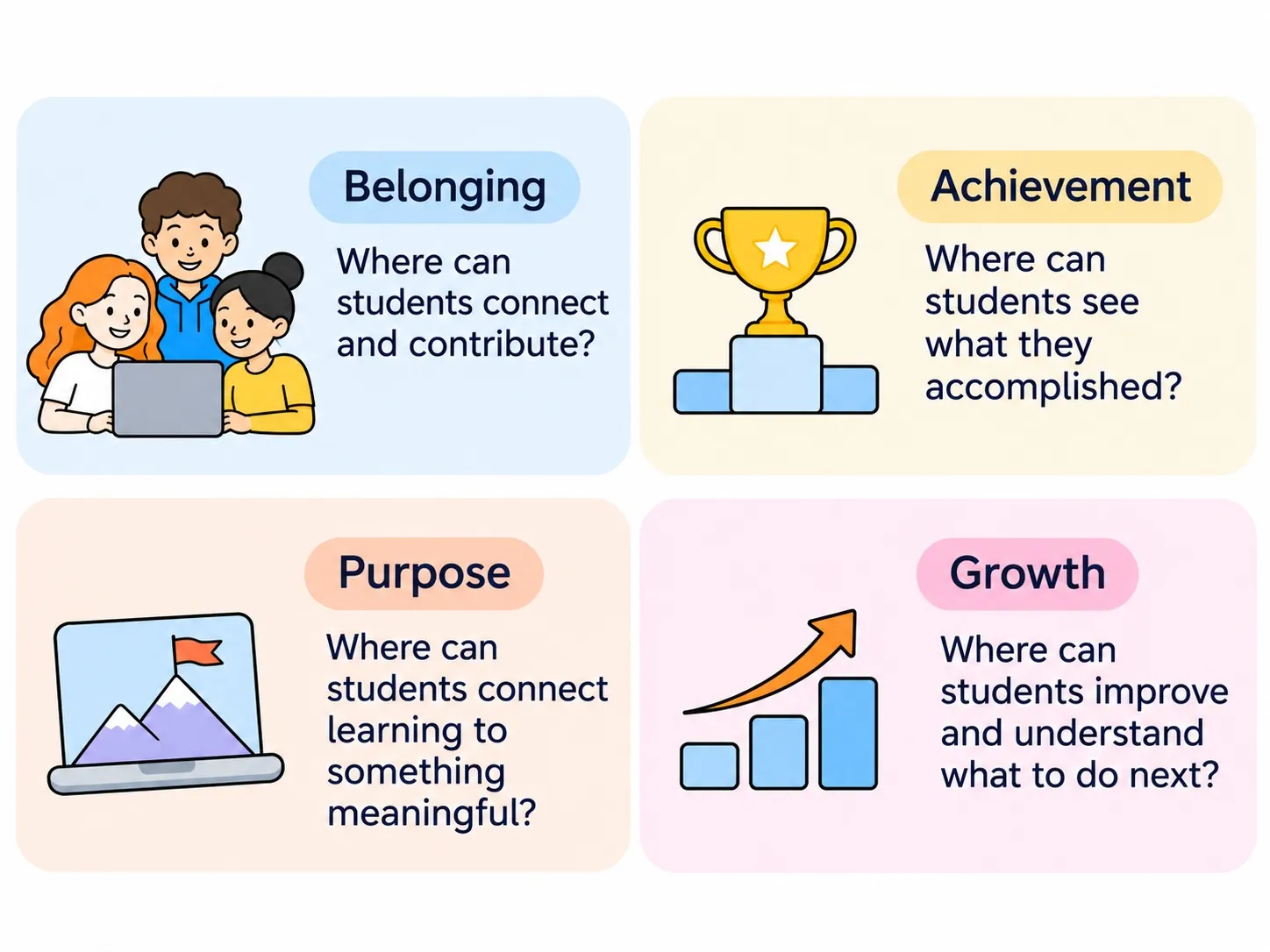
These questions help us build engagement into the lesson from the start and look beyond simple completion to how students participate, respond to feedback, and develop over time.
Want to try YaizY curriculum with your students? Explore live or school-led options with us: https://yaizy.io/contact-yaizy
References
Farrington, C. A., Roderick, M., Allensworth, E., Nagaoka, J., Keyes, T. S., Johnson, D. W., & Beechum, N. O. (2012). Teaching adolescents to become learners: The role of noncognitive factors in shaping school performance. A critical literature review. University of Chicago Consortium on Chicago School Research. https://consortium.uchicago.edu/publications/teaching-adolescents-become-learners-role-noncognitive-factors-shaping-school
Hulleman, C. S., & Harackiewicz, J. M. (2009). Promoting interest and performance in high school science classes. Science, 326(5958), 1410–1412. https://doi.org/10.1126/science.1177067
Yeager, D. S., et al. (2019). A national experiment reveals where a growth mindset improves achievement. Nature, 573, 364–369. https://doi.org/10.1038/s41586-019-1466-y
Zimmerman, B. J. (2002). Becoming a self-regulated learner: An overview. Theory Into Practice, 41(2), 64–70. https://doi.org/10.1207/s15430421tip4102_2
Thanks for reading.
Back to Blog